Showing posts with label SUCCESS. Show all posts

Oftentimes, we think success is about doing things over and over again until we finally see results. But if you’ve ever been in a rut, you know that’s not always what works.

To really see upward movement in your life, you have to learn how to create a consistency cocktail. Consistency is made up of three key ingredients and, like any good cocktail, they should not be used in equal amounts.

Related: 10 Tips for Consistent Personal Growth

Ingredient 1: Walking the Walk

This first ingredient makes up the largest part of your cocktail. “Walking your walk” (and not just “talking your talk”) describes the little steps you take throughout the day that breathe life into your values. It’s not enough to just say you have values. You actually have to live them out in the small moments that make up your day.

For example, one of my core values is caring for the least, the last, and the forgotten. This shapes how I talk to people, what projects I accept, and the way I invest my money.

Ingredient 2: Connecting to Your Why

Constantly reminding yourself of the meaning, the why behind your actions will allow you to power through even when you’re tired, stressed out or unmotivated.

I am caring for my health better than I ever have, and it’s because I am more connected to my why: I want to stay fit so I can live for a long time for my children and their children, not because I want to look good in photos. Once you make this mental shift, everything will change.

Ingredient 3: A Little Disruption

This is the magic ingredient—you just need a pinch of it. Consistency without disruption is simply a routine. Disruption means moving from the status quo to the cutting edge.

I am a huge believer in conducting a self-review every 90 days. That period of time is long enough to ensure you’re not jumping from goal to goal, but it’s regular enough to keep you from getting into a rut.

During your self-review, ask yourself: What have been my major successes in the past three months? How have I moved forward? Am I still moving in the direction I want to go? Is there a better way to do things?

Mixed correctly, this cocktail will allow you to develop confidence and become more purposeful with how you use your time and energy.

Related: What Is My Purpose in Life?

This article originally appeared in the September/October 2019 issue of SUCCESS magazine.
Photo by @kurteggering via Twenty20

The post 3 Keys to Mastering the Art of Consistency appeared first on SUCCESS.


from SUCCESS https://ift.tt/2HslbHD
via IFTTT

Robin Sharma wants me to wake up at 5 a.m. He swears I’ll feel more energized and productive. He tells me that Mozart, Frank Lloyd Wright, and Ernest Hemingway made a habit of rising early.

He promises that if I wake up at 5 every morning and follow his 20/20/20 formula for what he calls a “Victory hour,” my life will change. My creativity is going to soar, my fitness will improve, and I will just generally feel better about myself.

But right now, at 4:58 a.m. on a Thursday, the only thing I feel is tired.

But one motivating factor forces me out of my warm bed: The chance to prove this man wrong.

Sharma, the famous Canadian personal success guru and author of many best-selling books including 1997’s The Monk Who Sold His Ferrari, probably couldn’t care less whether I prove him wrong. But I do.

I blazed through his newest book, The 5 AM Club, in a few days before speaking with him. Told in parable form, the story features four central characters: The Spellbinder, The Homeless Man/Billionaire, The Artist, and The Entrepreneur. Through the course of the book, the Artist and the Entrepreneur go through a complete life change due to the teachings of The Spellbinder and Billionaire characters. The main point of their lessons is, of course, that the two should get up at 5 a.m. and structure their days according to Sharma’s formulas.

I’m not saying that I was cynical about the benefits, but it did all seem a little overstated. I had to test it myself. When the clock hit 5 a.m., I crawled out of bed to begin my day with the 20/20/20 formula that was supposed to change my life.

Where It All Began

Robin Sharma is the son of Indian and Kenyan immigrants to Canada. He says he came from humble beginnings and the immigrant mindset that drives so many high-achievers took root in him from an early age. He graduated from law school and became a successful lawyer at a big firm in Toronto.

“But when I would wake up in the morning and look in the mirror, I didn’t like the person that was looking back at me,” says Sharma. “I was very empty. There was an angst.”

He turned to education, this time studying the lives of the great women and men of the world, looking to understand their tactics and methods to implement those practices in his life. Out of this transformation came his first book, 1994’s Megaliving.

Despite some difficulties as a first-time author, Sharma was able to sell enough copies of the book to begin his career as a speaker, author, and personal success guru. Out of that moderate success, Sharma started to dream bigger. His second book, The Monk Who Sold His Ferrari, caught fire and launched Sharma into global fame.

Suddenly, Sharma was a man in his early 30s speaking to audiences of thousands all over the world. His morning routine and his disciplined life that had been shaped in his 20s were vital to helping him avoid the pitfalls that so many people experience when fame and success come their way.

The 5AM Club

COURTESY OF ROBIN SHARMA

Exercise, Reflect, Grow

Do you just get up at 5 a.m. and start cranking on those emails before any of your co-workers and competitors? Is that how you get ahead and stay ahead?

Not exactly.

Sharma lays out a detailed routine in the book and claims it’s what has helped billionaires, superstar athletes, and others with whom he’s worked through the years.

Here’s how the 20/20/20 formula is broken down: The first 20 minutes of your day are for sweaty exercise. Sharma’s “Billionaire” character gets deep into the science of why sweating and getting your heart rate up early in the morning are so good for you. In summary, you’ll increase your feel-good dopamine and serotonin levels and kickstart your metabolism while lowering your levels of cortisol, essentially a stress hormone.

The next 20 minutes should be quieter, dedicated to journaling, meditating, planning, praying or contemplating. This should get your mind, heart and soul in the right place for a day that promises to throw all kinds of difficulty and stress your way. Taking this time to be quiet and still will increase your gratitude and your happiness.

While the exercise piece is a pretty specific and, in Sharma’s terms, “non-negotiable,” piece of the 5 a.m. puzzle, the reflection portion allows more creativity for you to do what is most comfortable for you. But one part that Sharma insists should be included in your second 20 minutes is journaling. Writing down your goals, plans, commitments, and the things you are grateful for will shape your day more positively.

The final 20 minutes allow for even more customization. The “Grow” period is left for you to learn whatever it is you feel like learning. So if you want to listen to a podcast about successful entrepreneurs, or read a great book, or work on a language you want to learn, all of that is in play in these 20 minutes. The goal is to stimulate your brain and improve your intellectual capabilities.

Lots of Coffee, Yawning, and Productivity

OK, that’s all well and good. But maybe you are like me. You’re a night owl. Your best work has been completed in the similarly quiet hours of 11 p.m. to 2 a.m.

For every Hemingway the book uses as an example of an early riser, I counter in my head with Winston Churchill, one of the most prolific writers and human beings ever, who would write until 2 or 3 a.m. and stay in bed until the late morning. Surely there are those who are built for the 5 a.m. club, and there are those who are more suited for the night club.

But, to be honest, I haven’t really been as productive late at night as I used to be. In my college years and early 20s, inspiration would strike late, and I’d grab a coffee and crank something out. I once applied to a life-changing job at 3 a.m. However, those days seem to have passed me by. I need a change.


“I slip all the time. I think most people do. Each day is simply about fighting the disruptive currents and getting back on track.”


So, here I am trying to figure out how to use my old-school alarm clock at 4:58 a.m. because following Sharma’s plan means my phone stays in another room. I slink out of bed as my wife, who decided to join me in this experiment, does the same. We don’t say much to each other. Our dogs, excited by the alarm, run into our room with a burst of energy that helps to wake us up a little more. We head into the kitchen to begin our workout. Honestly, it’s easier than I expected. Once the shoes are on and the warm-up begins, I feel as awake as ever.

After the workout, we split up and eat our breakfast while spending our next 20 minutes quietly. We choose to pray, journal, and read our Bibles. This is something we often talk about desiring to do more, but when the stresses of life hit us in the face the second we usually wake up, it’s all too easy to cut 20 minutes of prayer out of the day. We then spend the final 20 minutes reading, learning, listening to things that improve our lives, or working on our side gigs.

The Victory Hour is complete. And now it’s 6 a.m. Work isn’t for a few more hours. Now what?

This is where we found even more benefits. Instead of sleeping through the 5 and 6 a.m. hours, we were now fully awake to take advantage of this extra time. My wife has a home bakery and has been putting in really late hours over the past six months, never having enough time after her full-time job to decorate the cookies that she sells. I’m a writer, and I never have time after work to write the things I want to write. At 6 a.m., we are both able to devote ourselves to these things completely free from distraction.

What I found to be the most vital tenet of The 5 AM Club is the ban on electronic devices. Not in your bedroom, not as your alarm clock, not as the first thing you look at in the morning. No checking emails, or tweets, or Instagram, or text messages. No one should need you at 5 a.m.; the phone and computer can wait until you’ve started your day in the right way. Extending this ban until 7 a.m. proved to be simple, yet magical.

But I don’t want to act like this was a consistent, comfortable, and clean improvement. Every day that we tried to wake up at 5 a.m. was difficult. Sometimes, we just flat-out didn’t do it. We set the alarms and snoozed them and woke up at 7 a.m. But upon reflection, we missed those extra hours in our day.

I asked Sharma if he ever hits the snooze button, or falls off the 5 a.m. wagon and has to get back on target. I figured after 22 years of perfecting his morning routine that he might not even understand the struggles of a new member of the club.

“I slip all the time. I think most people do,” says Sharma. “One time the pilot on a little plane let me fly a little bit, and as I was holding the yoke, I noticed the plane was constantly being pushed off course by the winds. My goal was to make sure that we stayed on course. That’s what happens every single day to every single one of us. There are temptations and distractions that get us off our habits and our priorities. Each day is simply about fighting the disruptive currents and getting back on track.”

Armed with the knowledge that even Sharma slips and oversleeps, it was easier for me to get back on course and join the club again the next morning. I’m not a billionaire or a superstar athlete or Ernest Hemingway, but I do feel more productive, alert, and ready for my day.

Maybe, it’s as simple as not hitting snooze.

Related: How to Create a Bulletproof Morning Routine


The 5AM Club

This article originally appeared in the September/October 2019 issue of SUCCESS magazine

The post Will Joining the 5 AM Club Change Your Life? appeared first on SUCCESS.


from SUCCESS https://ift.tt/2ZvY0Cd
via IFTTT

When Ben Lamm was in middle school, his mother told him to mow the lawn while she ran a few errands. Upon returning home, she found a neighborhood kid finishing the grass. When she found Ben playing video games, he said, “I gave him some of my allowance, so we all came out ahead.”

No one could argue against his business chops. As a high school senior in 1999, Lamm taught himself Macromedia Flash before it evolved into Adobe and sold his first website for $20,000. In his junior year at Baylor University, while carrying a double major of Accounting and Finance, he told one of his professors that they were going to be business partners. Never mind the latter didn’t know his student’s name. Less than two years later, the professor was working for Lamm’s first startup.

Lamm’s mind is wired differently than most. Even his personality is atypical compared to the majority of successful serial entrepreneurs, a hybrid combination of Types A and B—competitive, high-energy and ambitious, yet naturally social, authentic, fast-forward button talkative yet chill to the point of showing up for business meetings with potential investors wearing a T-shirt and flip-flops, not to mention the long hair and unkempt beard.

“Work and life are complicated enough without that extra layer of trying to be who you aren’t,” Lamm says.

Ben Lamm

© JOHN DAVIDSON

For every prosperous entrepreneur, there are failed ventures. It’s the cost of playing the game. Thus far, though, Lamm has proven an exception. Each of his previous four startups have grown into wildly successful companies before selling at high profit margins.

First there was Simply Interactive, an e-learning software business Lamm launched in college. Then there was Chaotic Moon, an Austin-based creative studio that grew to more than 200 employees and $50 million in yearly revenue before being purchased by Accenture. Next was Team Chaos, a game development venture that sold to Zynga, followed by Conversable, which teamed with the likes of Whole Foods and Pizza Hut by using automated software to interact with customers via social media.


Work and life are complicated enough without that extra layer of trying to be who you aren’t.


“I know a lot of people like to say they are product people, but I’m more of a brand guy,” Lamm says. “A lot of startups won’t spend the proper time to brand. They are obsessed with revenue. You want the story to resonate. We shouldn’t need a mission statement with five bullet points.”

True to form, for his latest, and without question most ambitious enterprise, Lamm spent six months branding Hypergiant before launching in February 2018. If it is successful, there is really no way of underselling the ramifications. Simplified to the millionth exponent, the objective is Internet and data streaming in space, which is all the more relevant since not only NASA is planning to return to the moon, but such private visionaries as Amazon’s Jeff Bezos are also investing in the future of space travel. Currently, it takes eight minutes to send a signal to Mars. The goal is eight seconds.

“We wouldn’t advance society if we weren’t a curious species,” Lamm says. “We are destined to go to the stars. I fundamentally believe we will be an interplanetary species. And definitely in our lifetime, permanent residents on the moon and Mars.”

Ben Lamm

COURTESY OF HYPERGIANT

Hypergiant has created nearly 150 jobs in its first 14 months and has already added three subsidiaries to focus on different tasks, including Space Age Solutions, which is developing custom AI solutions, and Applied Sciences, which is developing AI products based on trending needs.

Hypergiant likely wouldn’t have even been created without the AI revolution, as Lamm conceptually thought of the company when more and more clients at Conversable asked him to assist with their AI demands. If Hypergiant succeeds in space, it will be heavily reliant on AI capabilities.

“We believe AI is going to be as transformative if not more than the Internet,” Lamm says. “And look what the Internet has done for the world.”

After successfully starting and selling four startups, the stakes are on another level for Lamm this time. Unlike previous forays, Hypergiant is for the long term.

“Every business I’ve built so far, I’ve thought here’s the market opportunity, here’s something I’m super interested in, here’s how we build the brand to own the category, here’s how we scale both services and products to win that, here’s the culture to do that,” Lamm says

“Hypergiant is a different beast. It’s not my intent to ever sell it. This is my legacy. If we are right, it’s a trillion-dollar company. I’m looking at this as the rest of my life.”

Related: 6 Guiding Principles to Simplify Your Entrepreneurial Journey

This article originally appeared in the September/October 2019 issue of SUCCESS magazine

The post Ben Lamm Is Done Starting and Selling Startups appeared first on SUCCESS.


from SUCCESS https://ift.tt/33REX8R
via IFTTT

What is the simplest way to find your passion?

The simplest way to find your passion is to think with your heart. What lights your heart on fire? What lights you up? What gets you excited? You know when you hit the bed and your alarm goes off? What gets you popping out of the bed in the morning? Once you’re able to identify what those are, start to key in on where you get that consistent feeling of drive and desire to get things done, and that’s it.

What role does purpose play in business?

Without an idea of knowing where you’re going, you can be knocked onto any which path that comes your way. Having a sense of purpose serves as almost your guiding star—you know which direction you’re headed, you know why you’re doing it and you can communicate that to others.

Having a sense of purpose allows you to bring other people into the fold and get them to be part of the team that drives towards that purpose.

Can anyone become an innovator and how?

Yes! The best way to do that is to learn to break some rules. Learn to break some rules because if the norm is that you’re so comfortable to do things the way they’ve always been done you will rarely look outside of the defined lines to find new ways of doing things. Don’t break too many rules, but get comfortable breaking a few rules.

Watch the full video to learn more! 

The post Peter Yobo Shares Six Insights to Success appeared first on SUCCESS.


from SUCCESS https://ift.tt/31UvNXr
via IFTTT
“In times of change, learners inherit the Earth, while the learned find themselves beautifully equipped to deal with a world that no longer exists.” –Eric Hoffer

We are now in an era of self-service learning. No longer can we wait for learning and development opportunities to be handed to us from above. We must decide to serve ourselves and level up every single day.

About two years ago, the CEO of AT&T, Randall Stephenson, made a big splash when he charged his employees to spend hours per week—outside of their 40 hours—on self-service learning. He said, “People who do not spend five to 10 hours a week in online learning, will obsolete themselves with the technology.”

His message to employees was that they must now begin to see themselves as the owners of their ongoing learning and development. This advice isn’t just for employees of big tech companies—it’s for everyone. Changes in technology affect the entire marketplace—which touches each and every working person.

The great news is there are more free and low-cost ways to engage in self-service learning than ever before.

  • You can not only check out physical books with a library card now, but you can download apps like Libby and rent audiobooks straight to your phone—without ever stepping foot into the library.
  • There are more than 700,000 active podcasts available right now and more than 29 million podcast episodes. The vast majority of these are free!
  • An app called Smartly delivers business classes directly to your phone. They even offer their own MBA programs.
  • An app called Instaread provides summaries of books you can listen to or read in just 15 minutes.

To launch self-service learning for yourself, start with just 15 minutes per day. That 15 minutes per day can start with a five-minute podcast, a five-minute audiobook and five minutes of writing in your journal about what you learned.

That learning compounds over time—days become weeks, weeks become months, months become years—and builds into something meaningful over time. Suddenly, you find yourself in the future you created by serving yourself with the best learning day by day.

For example, as a speaker, talent got me in the door, but it was not enough to scale my career to new heights. I had to take it upon myself to hire a coach. I had to learn how to write a book. I had to figure out what tweeting was all about. It didn’t happen overnight. Conversation by conversation, step by step, I did those learning reps every day. Over time, that learning compounded and built into a career I could never have dreamed of.

That’s true for the most successful people I know. There are no overnight successes—only hard-won, compounded learning that becomes visible over time.

Here is a quick-start guide to self-service learning:

1. Identify which learning objectives are most crucial for you to learn right now. 

2. Pinpoint 1-3 resources you can access TODAY.

3. Spend 15 minutes each day working through those resources.

4. Repeat.

Related: How to Use the Classroom Mindset to Experience Significant Change

The post A Quick-Start Guide to Self-Service Learning appeared first on SUCCESS.


from SUCCESS https://ift.tt/2Z6Fmkm
via IFTTT

How do we fall in love with learning so we don’t get complacent? The first thing is to look at is the opposite of falling in love with learning and that is, starting to drift back. The rule of nature says that we have two options: we can either move forward or we can move backwards. If you don’t want to be moving backwards, then you have to fall in love with getting new knowledge and constantly improving yourself. Otherwise, what are you here for? You have a lot to learn about being you and through every bit of learning that you do, you will open up more about what makes you happy and about how you’re going to achieve success.

Now, there’s a problem here and that is, we have access to so much knowledge, it’s like a fire hose. At the moment, we read over 100,000 words a day through street signs, blogs, magazines and more. So many people are trying to put their thought processes onto us, but the key is to get a single purpose and to focus on what you want to achieve with your life so that you can start to consume and filter all this information. This will open doors for you like nothing else and you’ll be consuming it in a unique way that brings your passion and your purpose, to that article. Try that with the next thing you read.

The post How to Fall in Love With Learning So You Don’t Get Complacent appeared first on SUCCESS.


from SUCCESS https://ift.tt/2H5t9q4
via IFTTT

How do you decide when it’s time to shake up the status quo? 

Matthew Manos

Developing processes and systems that are replicable should be the goal of any entrepreneur, but getting caught in repetition should not be. The moment I feel as though I’ve stopped learning is when I know it’s time to shake things up.

—Matthew Manos, founder and managing director at verynice

Yuko KaifuNo matter how demanding your job is, you can still keep pushing yourself as long as you feel like it is fun and fulfilling. Whenever myself and my colleagues’ morale starts declining and the energy level becomes consistently low, I decide to do something dynamic.


—Yuko Kaifu, president of JAPAN HOUSE Los Angeles 

Nishant Shah

I strongly believe one needs to keep evolving, even if that means taking a risky decision. If you really believe in something strongly and your instinct says it’s going to work, just do it. It’s okay to fail sometimes because that creates a learning opportunity. Everybody has the potential to push the envelope, so why settle for anything less? In every aspect of your life, whenever you start getting into some sort of a comfort zone, it’s time to challenge yourself to do something new because accepting status quo is where your growth and learning stops.

—Nishant Shah, founder and CEO of BannerBuzz

Deb Waterman JohnsIt’s always time to shake up the status quo! In life and in business, we should always look at how we evolve, challenge ourselves and continue thinking out-of-the-box. When it comes to our brand, we always look at how we stay loyal to our customer base while also continuing to give them something that’s new, exciting and dynamic. And in life, I think you have to continue to challenge yourself by exposing yourself to new ideas, by continuing to meet new people, by putting yourself in slightly uncomfortable situations where you have to be creative, be a free thinker.
Deb Waterman Johns, co-founder and chief creative officer of SCOUT bags

Related: Choose Growth Over Comfort—Your Success Depends on It

This article originally appeared in the September/October 2019 issue of SUCCESS magazine

The post 4 Tips for Knowing When It’s Time to Shake Up the Status Quo appeared first on SUCCESS.


from SUCCESS https://ift.tt/2Z6FlNk
via IFTTT

“Quick, quick, slow, slow,” my husband says as I try to focus. We stumble over each other’s feet.

“I think you’re going too fast—try to follow the beat better!” I quip back, laughing.

We’re in our small apartment living room practicing our first dance for our wedding. Both of us are rhythmically challenged, and we figured a series of lessons might help us look somewhat decent on the dance floor. Spoiler alert: It didn’t. We still stumbled over each other in front of our guests and struggled to maintain the song’s fairly quick beat.

But as I looked back on this memory of us dancing in our living room, I realized it didn’t matter that the lessons didn’t pay off. Simply learning something new together—how to dance—gave me a string of memories I’ll never forget.

I thought back to other times we tried new things together: learning how to do the trapeze on a New York City pier on one of our first dates; taking a Thai cooking class on a cold Chicago night; learning how to make classic cocktails in a speakeasy-style bar; zip lining at 40 miles per hour in Costa Rica. Some of these experiences are my best memories from the past 10 years.

We always have such a wonderful time when we’re trying something new together. It seems to strengthen our relationship, and makes me feel like we have a closer connection.

It turns out my fledgling theory is backed by research. One study published in the Journal of Personality and Social Psychology in 2000 discovered—through surveys, questionnaires and lab experiments—that couples who participated in “novel” and “arousing” activities reported improved relationship quality, as well as increased passion for one another. These couples had been in relationships for anywhere from two months to 15 years. The most surprising part? Couples reported this enhancement to their relationship after a task that was just seven minutes long.

Another study published in the Journal of Social and Personal Relationships in 1993 studied over 50 married couples who engaged in activities together every week for 10 weeks. These activities were described as either “exciting” or “pleasant.” (A control group of couples didn’t participate in any activities.)

After following these couples and tracking their self-reported levels of satisfaction, the researchers found that both the “exciting” and “pleasant” groups reported higher satisfaction with their marriage than the control group. Plus, the “exciting” group (who engaged in more adrenaline-boosting activities) reported even more satisfaction than the “pleasant” group. The study authors concluded that stimulating activities can enhance marital satisfaction.

These two studies show that learning new things with our partner can strengthen our connection. But how exactly does this work? The key is vulnerability.

“Learning new things together strengthens bonds because it is at those moments we can show our vulnerability to one another,” says Dr. Hisla Bates, M.D., a pediatric and adult psychiatrist based in New York City. “When we are learning a new task, neither party is an expert, and mishaps and failures are bound to happen. In those vulnerable moments when we fail, the other party can show support. They can work together to find a solution, and working together helps deepen the connection.”

I think back to a couple of years ago, when my husband and I were in Costa Rica. We happened to drive by one of the highest zip lines in Central America. The course included seven zip lines that were 700 feet above the jungle canopy and nearly 2,500 feet in length. At one point, the website says you fly at over 40 miles per hour. My husband is an adrenaline junkie, while I’m a bit more timid. I could tell he was bubbling with excitement at the prospect of zip lining, so I agreed to go for it.

I buckled my helmet and got hooked into the line, knees buckling and stomach turning the entire time. I went first so my husband could give me a pep talk. “You got this, babe! You’ll be on the other side before you know it. I’ll be right behind you!” I whipped through the air at lightning speed, screaming at the top of my lungs with a racing heart.

I’ll never forget the look on my husband’s face when he landed on the platform behind me. “That. Was. Insane!” he shouted before giving me a hug and telling me how proud of me he was.

We connected deeply in this moment because of our shared vulnerability. “Vulnerability is the ability to open up and take risks with your partner,” Bates says. “With that vulnerability, there is growth and maturity in a relationship.”

Want to put this theory into practice in your own relationship? Follow these tips to get started:

• Think small.

The benefits reaped from learning new things with your partner can come from activities as small as hiking, trying a new recipe, canoeing in the local lake or taking a fitness class together. You don’t have to bungee jump or skydive to grow closer.

• Pick something that’s new for both of you.

Try selecting activities that both partners are unfamiliar with, as this will ensure you’re on the same page. Instead of learning Pilates because your spouse does it, for example, try taking a rock-climbing class or something neither of you has ever done.

• Put it on the calendar.

Try to learn something new together once a month. Pick one Saturday or Sunday each month, for example, that will be designated for a new endeavor.

• Make sure you debrief.

Some of my best memories with my husband are the moments after we learned something new together: We grabbed dinner after zip lining and eagerly discussed our adrenaline-filled ride, for instance, and we chatted over drinks following our trapeze class. Make sure you leave time to talk about the experience afterwards.

Related: The Secret to a Happy, Thriving Marriage: Communication

The post The Power of Learning New Things Together appeared first on SUCCESS.


from SUCCESS https://ift.tt/2KHygxu
via IFTTT

Learning is a lifelong process, especially when you’re an entrepreneur. As society and technology evolve, it’s important to keep on top of the latest trends and best practices so that you, and your business, can keep growing.

You can pursue advanced degrees or formal continuing education classes, but sometimes this isn’t feasible. Fortunately, there are plenty of opportunities for informal learning that don’t involve going back to school.

We asked members of the Young Entrepreneur Council how they’ve committed to lifelong learning outside of the traditional classroom setting. Here’s what they advise:

1. Travel.

There is no better way to grasp new ideas and educate yourself than to be in new places, meeting new people and experiencing new cultures. Traveling may not give you book smarts, but it will give you an education you can’t get in a classroom.

Colbey PfundLFNT Distribution

2. Try new things.

It is important to step outside of your comfort zone and try things you maybe would not normally try. It could be reading a book on a topic you might not normally gravitate to, eating a cuisine you would normally never try or seeing a concert of a genre of music you have never been into. Exposing yourself to the world outside of your bubble is a great way to continue to grow and learn.

Adrien SchmidtAristotle, by Bouquet.ai

3. Share knowledge with others.

Teaching others also teaches you something. It is the best test of your own knowledge. Whomever you are teaching or mentoring will have questions. This will force you to think critically and offer thoughtful answers. It will also create discussions that will tap into areas you may not have even thought about yet.

Blair ThomaseMerchantBroker

4. Keep in touch with mentors.

Every business owner has a couple of mentors they relied on when they first started their business. There’s a good chance that they have a lot of knowledge to share, and just because you’ve managed to create a successful business, that doesn’t mean that you’ve learned everything they have to offer. Keep in touch with the people who helped you get started.

Syed BalkhiWPBeginner

5. Listen to podcasts.

Lifelong learning is the only way to stay on top of the curve. However, it’s really difficult for entrepreneurs to squeeze in at least an hour a week to gain some knowledge. I discovered podcasts a few years ago and it’s been a game-changer for me. I listen to them in traffic, or when I do some physical tasks that don’t require mental concentration, like running or working out.

Solomon ThimothyOneIMS

6. Read blogs.

Reading industry-related blogs is a great way to practice lifelong learning. Because blog posts are shorter, in comparison to books, you can learn a lot in a short amount of time. I make sure to read at least a couple a day to get inspired, improve my own writing skills and learn new things.

Stephanie WellsFormidable Forms

7. Join an industry group.

Having other people around who are working toward similar or the same goals can help you grow. These members and friends keep you accountable, and you do the same for them. Meeting regularly builds the habit and commitment. In addition to building lifelong skills, from public speaking to writing to studying, you will gain lifelong friends.

Patrick BarnhillSpecialist ID, Inc.

8. Watch lectures on YouTube.

YouTube is full of professors giving educational lectures for everyone to see. If you want to learn more while not sitting in a classroom, consider taking the time to listen to a lecture on a subject you’re passionate about while on lunch. Even though you’re not in a class, you still get the benefits of having a student mentality.

David HenzelLTVPlus

9. Keep asking questions.

It’s so important to stay curious about life so that it never gets dull or boring. If you stay inquisitive about all there is to know, it’ll encourage you to keep learning new things, perhaps even things you never thought you could do. Encourage yourself to ask questions about anything and everything you’re curious about to keep your brain engaged and healthy.

Jared AtchisonWPForms

10. Watch documentaries.

An easy and entertaining way to practice lifelong learning is to watch documentaries. There are tons of awesome documentaries out there and it’s a great way to learn more about the world. I think it’s important to learn about a wide array of topics, not just ones that are related to your business. You never know what you’ll learn in a documentary that could inspire your next great idea.

John TurnerSeedProd LLC

11. Read everything.

The most important thing I ever got out of my education was a passion for reading. It’s because of this that I’ve been able to continue learning and growing long after finishing my degree. If you want to ensure that you’re informed about the latest developments in your field and that you’re always improving your mental capabilities, make it a habit to read everything you can get your hands on.

Bryce WelkerBeat The CPA

12. Take online classes.

I love the convenience of online courses that I can start and stop and then start again whenever I have a free half hour. It’s a productive way for me to unwind after working or something to do when I’m stuck somewhere, like at an airport or on a plane.

Serenity GibbonsNAACP

13. Listen to audiobooks.

Audiobooks are a super convenient way to keep learning new things on a daily basis. Whether it’s on your daily commute, while eating lunch or even during simpler tasks at work, it’s an easy way to consume new material and maintain your edge. I personally take a 30-minute walk every day after lunch just to make sure I get my “reading” in.

Karl KangurAbove House

14. Hang around curious minds.

It is said that “small minds discuss people, average minds discuss events and great minds discuss ideas.” If you want to be successful and a lifelong learner, it would be wise to hang around other curious people. What do your peers talk about when you’re together? Do they discuss deep topics and ideas or pointless, feel-good social gossip?

Andy KaruzaRelm Wellness

Related: How to Keep Learning

These answers are provided by Young Entrepreneur Council (YEC), an invite-only organization comprised of the world’s most successful young entrepreneurs. YEC members represent nearly every industry, generate billions of dollars in revenue each year and have created tens of thousands of jobs. Learn more at yec.co

The post 14 Ways to Commit to Lifelong Learning appeared first on SUCCESS.


from SUCCESS https://ift.tt/2KyOg6l
via IFTTT

My mother used to wash old tennis balls.

Toward the end of every summer, I would visit our community tennis club and ask the pro if she had any dead balls that I could take off her hands. I would deliver a bag to my mother, who would endure the thunderous sound that comes from laundering dozens of tennis balls in a residential washing machine, then pass the lot over to my father so he could drill holes in each one.

Mom taught elementary school for 29 years, most of that time in kindergarten. The tennis ball project was just another ritual that comes with being part of a kindergarten teacher’s family, just like learning to run a laminating machine or how to turn two dozen pint milk jugs into graham cracker gingerbread houses. Once my father was done with them, the tennis balls fit perfectly onto the feet of a standard elementary school chair and eliminated the high-pitched scraping noise that otherwise occurred every time a child shifted his or her seat. When you are charged with taking a classroom filled with 5- and 6-year-olds who have never been to school before and turning them into students, it’s the little things that count.

Each year, like teachers across the country, mom would head back into the classroom a few weeks before classes began. She would spend hours in her hot room getting things ready for the next group of wide-eyed youngsters prepared to make their elementary school debut. She would make nametags and daily schedules, create activity stations and set up a reading corner. She would decorate her door and bulletin boards with messages of welcome and possibility. And, yes, put tennis balls onto the feet of the chairs.

* * *

The start of a new school year is as much, if not more, of a marker for new beginnings and transformative change as New Year’s Day. Stores are filled with supplies to help you plan and organize your life. There is a fresh batch of sports leagues and fitness classes to try. Regularly scheduled social events, from Bible studies to poker night, return from summer hiatus.

Related: The Grown-Up Guide to a Back-to-School Fresh Start

Even if you’re not in school and don’t have school-age children at home, chances are you feel this seasonal change too. The swimming pools close. The nights begin getting longer. The backyard barbecues become fewer and farther between. The rhythm of life shifts away from vacation mode and toward something more structured and fast paced. We are no longer basking in the glorious sunshine but once again on the move and going places.

Or are we? Children certainly are. Kindergarteners are walking into a school for the first time, backpacks filled with supplies and ready to be transformed into students. In just the first few days, they will learn to follow a daily schedule, be responsible for themselves, and work together in a team. Over the next nine months, they likely will make tremendous progress in multiple subjects: math, reading, writing, science, social studies and more. By the last day of school, they will look like different people. Don’t believe me? Check the endless first day/last day photos their parents post on social media.


What happens inside those classroom walls that conditions us to be learners, to create a new vision for ourselves and then turn that vision into reality?


Similar transformations happen to adults pursuing structured education. The first day/last day photos of college students may not come with the adorable dimpled cheeks and gap-toothed smiles of elementary school, but the trajectory of change is just as steep. But once we leave formal education behind, we rarely experience a similar level of progress in such a compressed amount of time.

Why is this? What happens inside those classroom walls that conditions us to be learners, to create a new vision for ourselves and then turn that vision into reality?

Teachers call their secret sauce classroom management. The idea is that if you provide the right structure to the environment and then follow those structures religiously, you can achieve more significant results at scale.

Consistent structure is powerful. One year when my mom was teaching, one of her colleagues had a transfer student join her class in March, quite late in the school year. The little boy had a long discipline record for a kindergartener, including eight suspensions from his prior school and a reputation for cursing at pretty much everyone. His teacher still remembers being nervous about how he would impact her classroom, but she welcomed him with a smile and kindly went over the rules, procedures and expectations for her class. On his second day, he challenged one of her directions with, “What are you going to do if I don’t do it?” Day after day, she explained that she was there to help him and believed he could do the work. She praised everything he did that was positive. It was an exhausting few weeks, but he turned into one of the best students that year.

* * *

Although your school days may be behind you, perhaps classroom management shouldn’t be a thing of your past. If you want to experience significant, lasting change in your life, try mapping out your goal as if you were going back to school to achieve it.

Related: Change: Humankind’s Greatest Asset

Start with planning your curriculum. Where do you want to be at the end of your school year? What will you need to do to achieve that? What will you need to read or study? What skills will you need to practice?

Next, create your lesson plans. Teachers break their curriculum down into detailed, day-by-day lesson plans that map out a script for each day. Their lesson plans include a series of activities designed to deliver on the day’s objectives. Each day builds on the previous one, culminating in achieving the final desired result. Fitness goals fit neatly into this framework. Google “marathon training plan,” for example, and you’ll find multiple curriculum options broken down into daily plans for physical training, nutrition, and more. Other goals may require more imagination on your part.

Finally, set your environment. The school environment comes with rules—lots of them. To adopt the benefits of the school year in your adult journey, establish some new rules to live by. Many school rules translate well into the adult world. For example, schools provide a definite start and end time to the learning day and have a strict schedule in between. They typically limit the use of electronic devices and other potential distractions. They insist on a rigorous program of homework and independent study to reinforce the material. Other school rules require some adaptation. For example, you may no longer have a use for colored pencils or graphing calculators, but you likely will benefit from having all of your supplies at the ready at the start of your day.

Get too structured, of course, and you kill the joy. Schools have caught onto this in recent years, to the benefit of today’s students. My youngest son, for example, walked into his second-grade classroom to find he’d been assigned a camp chair instead of a traditional desk and chair. The next day, he had a giant floor pillow. Another day, he had a wobbly stool. This flexible seating gave him and his classmates more control over their own learning environment, a key, new research suggests, to engaging with the material.

* * *

By pairing a robust curriculum with solid classroom management, teachers can perform virtual miracles in a single school year. Kindergarteners who couldn’t write their names will be able to draft their own stories with a beginning, middle, and end. New middle schoolers who could barely open their lockers will be able to complete multi-part assignments on Google Classroom, complete with slide presentation. High school seniors will cross that final bridge into adulthood, heading out into the world with the independence to choose jobs or advanced studies.

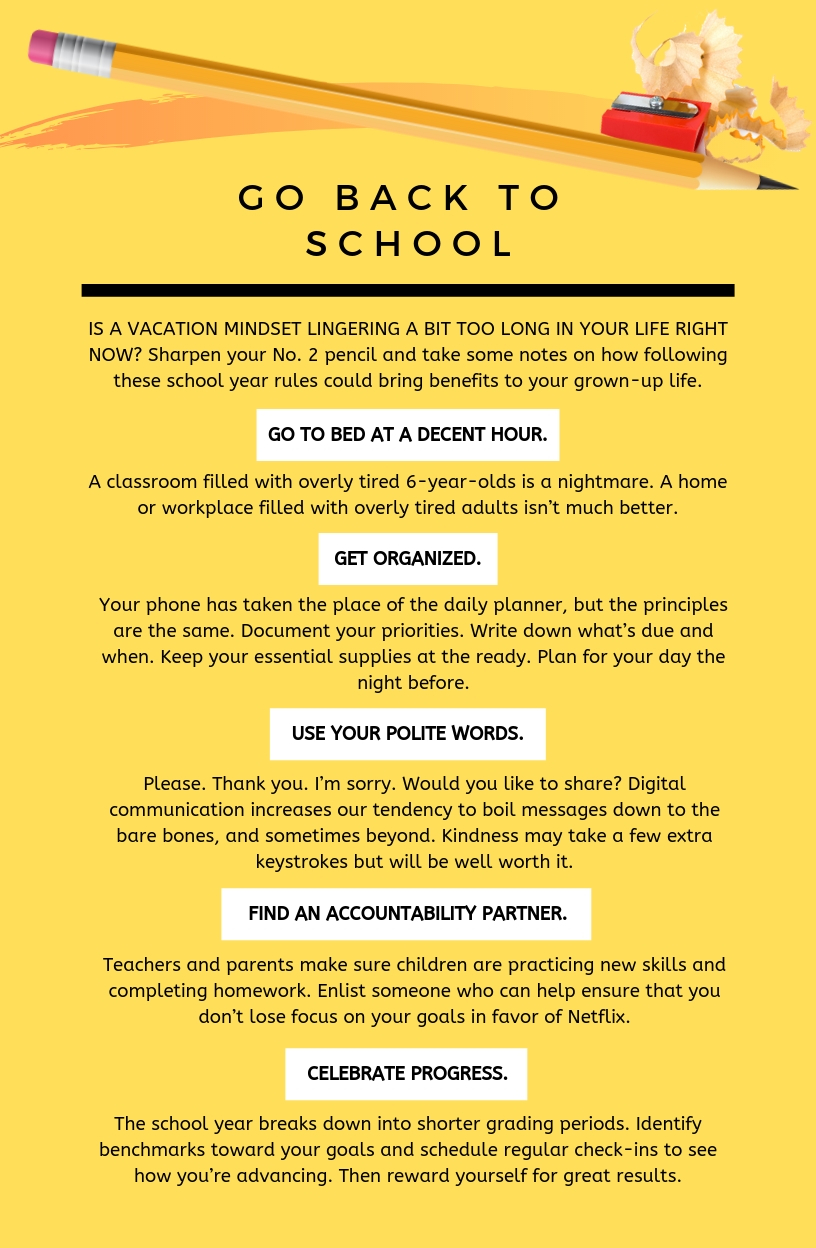
What could you accomplish in your own life in the next year? Maybe you can’t devote eight hours a day to your pursuit as if you were a full-time student, but you can still use this time of year to embrace a season of change. Identify your goal and then map out your plan for taking yourself back to school—at least in mindset—to make it happen.

Even if you need to start by eliminating your squeaky chair.

Related: 3 Techniques to Never Stop Learning


classroom mindset


This article originally appeared in the September/October 2019 issue of SUCCESS magazine

The post How to Use the Classroom Mindset to Experience Significant Change appeared first on SUCCESS.


from SUCCESS https://ift.tt/2KEEKx3
via IFTTT

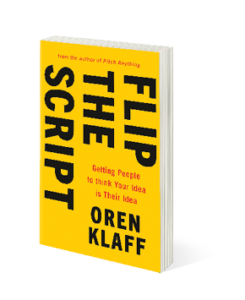
1. Flip the Script

Getting People to Think Your Idea Is Their Idea

By Oren Klaff

How do you get someone to buy your product, adopt your idea or go with your plan? You have to convince them that the idea isn’t yours, it’s theirs, says Oren Klaff, an expert on selling ideas. In Flip the Script, he offers steps to pressure-free persuasion.

How do you push someone without being pushy? You start by getting your audience to pay total attention and take you seriously—you establish status. Then you show them you’re an expert, and once you’ve done that, only then do you explain your big idea.

Klaff claims his process works as well in the boardroom as it does at the dinner table with your veggie-hating kids. (August; Portfolio; $26)

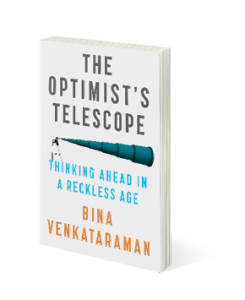
2. The Optimist’s Telescope

Thinking Ahead in a Reckless Age

By Bina Venkataraman

A few years ago Bina Venkataraman got a rash after going for a hike in the Hudson Valley. She made a note to get it checked out, but her 16-hour days dominated by deadlines led her to forget about it. That is until her knee swelled to the size a grapefruit, and she found out she had Lyme disease.

Of course, Venkataraman’s book isn’t about recognizing the symptom of Lyme disease, it’s about how we make short-sighted decisions not just in our personal lives, but in business, government and society.

Using examples from real-world stories and new science, Venkataraman provides readers with ways to do this such as changing our perspective, looking beyond short-term targets, creating immediate rewards for future goals, and designing better institutions. (August; Portfolio; $28)

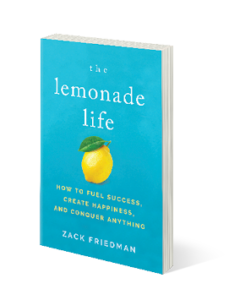
3. The Lemonade Life

How to Fuel Success, Create Happiness, and Conquer Anything

By Zack Friedman

Zack Friedman doesn’t want you to read his book if your life is perfect, if you’re trying to get rich quick, if you expect your problems to be solved overnight or if you prefer style over substance. Also, don’t read his book if you don’t like lemonade, he writes.

“This book is for the successful who want to succeed more. It’s for the strugglers who want to struggle less. It’s for the dreamers who want action, and for the actors who never stop believing. It’s for the believers who think anything is possible, and the nonbelievers who don’t,” Friedman writes.

If that sounds like you, dive in. Friedman offers a five-step process for achieving more. He carefully explains each step, and how to implement changes in your life, in accessible, easy to understand language. (August; HarperCollins Leadership; $28)

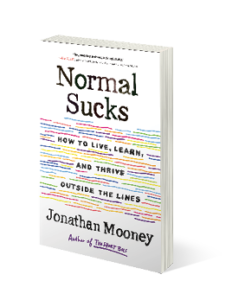
4. Normal Sucks

How to Live, Learn, and Thrive Outside the Lines

By Jonathan Mooney

Jonathan Mooney didn’t learn to read until he was 12. Growing up, he faced several challenges including dyslexia and ADHD.

“I’m still dyslexic. I still can’t sit still or find my car keys. I still can’t spell. I still can’t read out loud. I still struggle with the challenges and gifts of anxiety and depression. I haven’t fixed myself,” Mooney writes.

So what changed? Mooney shifted his perspective about what being “normal” really means. “Normal is a false standard for human value,” Mooney writes.

In Normal Sucks, Mooney shows readers how they can reshape their own ideas about normalcy. He does this by sharing his own stories about his challenges, but he also brings in an impressive litany of resources and research. (August; Henry Holt and Co; $26)

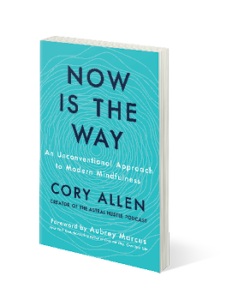
5. Now Is the Way

An Unconventional Approach to Modern Mindfulness

By Cory Allen

“No matter how frustrated or hopeless I’ve felt, I always had a small ember of hope in my heart that refused to be extinguished by the cold rain of life,” Cory Allen writes. “I kept believing, putting one foot in front of the other, and finding my way to more peace. More beauty. More love. More life.”

Allen, the podcaster behind The Astral Hustle, offers practical advice on meditation, moving on from the past, being kinder, and more. He also provides several exercises readers will find useful for learning how to relax and live in the moment. (September; TarcherPerigee; $25)

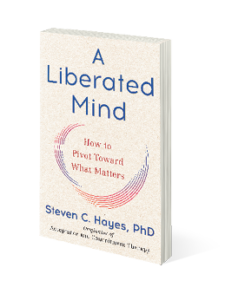
6. A Liberated Mind

How to Pivot Toward What Matters

By Steven C. Hayes, Ph.D.

No matter what you’re dealing with, change isn’t easy. In A Liberated Mind, Steven C. Hayes, Ph.D., writes about how you can successfully alter your course no matter what your issue is, be it anxiety, depression, substance abuse, PTSD, relationship issues and beyond.

Having dealt with his own problems, such as panic attacks, Hayes deftly explains how to pivot by creating habits, accepting vulnerability and changing perspective. But he doesn’t just draw on his own experiences; Hayes’ book is densely filled with references, research and analysis.

Hayes also discusses how the media, society and even conventional personal development impacts our ability to pivot. (August; Portfolio; $27)

Related: 10 Tips for Consistent Personal Growth

This article originally appeared in the September/October 2019 issue of SUCCESS magazine

The post 6 Books That Will Help You Think Better and Thrive More appeared first on SUCCESS.


from SUCCESS https://ift.tt/2yMrsJy
via IFTTT

The Consistency Issue of SUCCESS magazine is a guidebook for lifelong learning, establishing positive habits and the dogged pursuit of bold dreams, i.e. consistent personal growth. Inside, you’ll find articles on things like power habits and super growth, the perfect morning routine and how to unleash creativity, and so much more. The best part is that you can turn all of the advice you read into immediate results with these 10 steps:

1. Get a little trippy.

Overwork may be necessary sometimes, but should not be your default mode, as it leads to burnout. If you’re sensing its effects, plan a little getaway and ease off the throttle.

2. Lose control.

To get the most done, you cannot do it all. Delegation is an important skill for any leader. It may go against your perfectionist nature, but you need to trust the people around you.

3. Re-enroll.

The same concepts that educators bring to lesson-planning can help you in lifelong learning. What skill do you need to improve drastically on? Plan a nine-month curriculum for it this weekend.

4. Dream big.

What do you want to do with the rest of your life? Maybe you’re imagining a career change or something significant to occupy you in retirement. Get clarity with a lengthy journaling session.

5. Get the worm.

Take two weeks to give Robin Sharma’s 20-20-20 method a try. Wake up at 5 a.m. to spend 20 minutes exercising, 20 minutes in prayer or reflection, and 20 minutes focused on personal growth.

6. Lead yourself.

Know that the success of the people around you is vital to the team’s success, and their success is largely dependent on you. Make it a personal goal to read at least one leadership book per quarter.

7. Set a stretch goal.

To achieve his highest-grossing month ever, our solopreneur writer needed only to reframe his personal expectations. Commit to doing more than you thought possible by writing down a big goal.

8. Have no fear.

When we’re growing, we’re also bound to stumble and fall. Failure is a crucial aspect of success. If you’re worried about an upcoming result, try sketching out its potential benefits.

9. Find a mentor.

Kathy Ireland credits many of her achievements to the lessons she’s learned from her many mentors. If you don’t have one, ask around locally. Find out who can teach you something you don’t know.

Related: How Kathy Ireland Built Her Business Empire

10. Build a universe.

If creativity is part of your work and life, make a concerted effort to not constrain yourself with artificial limits. What other applications of your creativity have you not considered?


This article originally appeared in the September/October 2019 issue of SUCCESS magazine. Subscribe to the magazine here!

The post 10 Tips for Consistent Personal Growth appeared first on SUCCESS.


from SUCCESS https://ift.tt/2OJ6w0O
via IFTTT

When the opportunity to land Kathy Ireland for the cover of SUCCESS came together, we were ecstatic. For one thing, I’m not sure there’s a cover person in the history of the magazine industry that has sold more copies on newsstands than the former swimsuit supermodel.

But one doesn’t have to look far beyond that to see that this woman illustrates exactly the kind of long-term personal growth, progress and pursuit of her potential that we champion for all of our readers. Ever since she was a teenager, Ireland has been consistently learning, creating and building. Slowly, quietly, she had created a business empire. Kathy Ireland is proof of the value of consistency, and her achievements inspired this, The Consistency Issue of SUCCESS, a guidebook for lifelong learning, establishing positive habits and the dogged pursuit of bold dreams.

Related: How Kathy Ireland Built Her Business Empire

In life, few things are more consistent than change. So it’s apropos that this issue marks a new consistency for SUCCESS. Subscribers may have noticed that this issue came a month earlier than they were expecting. That’s because, as of this issue, we have expanded from a quarterly publication to a bimonthly.

Rather than four copies of SUCCESS per year, you can now expect six copies, all of the same size, featuring the same great writers and the same caliber of potentially life-changing content.

Not everything should have to change. I’m proud to say that the cost of a yearlong subscription to SUCCESS will remain the same price, even though subscribers will now be receiving two extra issues every 12 months.


Kathy Ireland is proof of the value of consistency, and her achievements inspired this, The Consistency Issue of SUCCESS, a guidebook for lifelong learning, establishing positive habits and the dogged pursuit of bold dreams.


We are thrilled to be able to play a more regular role in your journey to success. For more than 120 years, this magazine has been a pillar of inspiration, motivation and guidance. It is among the oldest titles still in publication anywhere, and I think the reason for that durability has been our consistency. Over the years, SUCCESS has had its share of different owners, different publishers, a long list of editors-in-chief, even several generations of readers.

But the mission is consistent: We are here to make your potential possible. I hope this issue helps you take the next step forward.

The post The Value of Consistency appeared first on SUCCESS.


from SUCCESS https://ift.tt/2T8MQCc
via IFTTT

Kathy Ireland, our cover subject for the September/October 2019 issue of SUCCESS magazine, knows how to create a strong, cohesive and enduring team. After all, most of the people on her core team at kathy ireland Worldwide (kiWW)—a multibillion-dollar brand—have been by her side for nearly 30 years.

Ireland created a successful team by identifying high performers early on. But how exactly did she determine who would be a great fit? Read on for Ireland’s tips for creating the perfect team.

1. Prioritize people who support the same common goals as you.

“The vision for our company is to teach, inspire, empower and make our world better,” Ireland says, adding that she only works with people who share this vision through a commitment to giving back. “A degree of effort, attention and resource must be devoted to nonprofits.”

Everyone who works with kiWW must pledge to support one of the company’s many missions, such as eradicating hunger and poverty, fighting human trafficking, and supporting military veterans.

“Once in a while, we’ll get people who say, ‘Nope, I’m not interested in any of these,’” Ireland says. “There’s something I believe everybody can support, but when we get somebody who can’t support any of these things, [we say], ‘OK, we’re not a good fit as partners.’”

2. Embrace people with different viewpoints and opinions.

Ireland says hiring a diverse group of people for her core team has been a crucial part of their success. “I love the idea of people with diverse backgrounds coming together for a common goal,” she says, noting that kiWW has received awards for its diversity.

“We have different personalities and different ways we approach life,” Ireland says. “If you only get along with people like you, you’re singing to the choir, and I just find that very boring. I love working with people who make me think and really learn and question why I believe what I do.”

3. Focus on the people first, not the money.

“We consider others more important than ourselves,” Ireland says. “When we’re looking at a professional relationship, the first question we ask ourselves is, ‘This partner or this person or this company—how will we elevate them and help them? They’re wonderful already, how will we help them grow even more?”

Ireland says some people believe this method of approaching business is counterintuitive. But that doesn’t shake Ireland’s conviction in its efficacy. “I’ve learned when we do things for the right reasons—and when we do them well and our eyes are off ourselves and on others—the money comes. Working with the right people—that’s what important to us.”

4. Don’t rush into a hire, especially a big one.

Ireland says some people have criticized that kiWW has grown too slowly. Ireland’s response?

“We’ve grown at a pace in which I’m comfortable with the time it takes to vet each potential partner and make sure that these are people who are going to help us honor our mission,” she says.

5. Make sure employees are treated well at every level.

Ireland’s father worked in labor relations with people like Cesar Chavez. She says her father’s commitment to always ensuring people were treated well was passed on to her. This means that in addition to regularly conducting focus groups, kiWW also does surprise factory inspections.

“For whatever we bring to market, [we ask]: How did we get there? What kind of footprint does that leave? All of these answers are critical to what we do and who we’re going to work with,” Ireland says.

6. Learn from the relationships that failed.

Unfortunately, kiWW has been burned by business relationships in the past. But instead of dwelling on these missteps, Ireland uses them as a learning experience.

“There have been times where people have not been honest,” Ireland says. “Sometimes people are not always who they say they are, and we’ve been disappointed. It’s difficult when we’ve been hurt in those ways, but we pick up and we recognize how we need to move forward in powerful ways. [It’s about] having the tenacity to keep going.”

7. Treat your work team like a sports team.

Ireland says she’s always had an affinity for sports and the unique perspective they offer when it comes to healthy competition.

“I have the most incredible team,” Ireland says. “I love them. They’re family. They’re also very competitive, but they’re fair—you just don’t win when you cheat, and I love that about our team.”

Related: Kathy Ireland: Her Universe Is Constantly Expanding

The post Kathy Ireland’s 7 Secrets for Picking the Perfect Team appeared first on SUCCESS.


from SUCCESS https://ift.tt/2MH3lUQ
via IFTTT

As a young model, Ireland faced rejection on a near daily basis. She says this helped shaped who she is as a businesswoman today.

Related: Kathy Ireland: Her Universe Is Constantly Expanding

“I really believe that rejection is a gift,” she says. “I didn’t recognize it and appreciate it at the time, but it would prepare me for the world of business. When people said no, when they laughed in my face … these things did not destroy me. If anything, when somebody would say no, my response would be, Well, at least we’re talking. I’ll come back tomorrow; maybe your circumstances will have changed; maybe you’ll be in a better mood.”

When it comes to rejection, one particular moment stands out for Ireland.

“When I worked as a model, my job description was basically to shut up and pose,” she says.

“When I had a rare opportunity to speak, a critic—very publicly—said I had a voice that could kill small animals. I was 25 years old and I couldn’t order a pizza on the phone. I had this high, squeaky voice, and they thought I was a kid making a prank phone call.”

The comment devastated Ireland, but it also opened her eyes. She was grateful for the critic’s harsh words, as they helped her see that she’d have to present a more mature, professional version of herself to be taken more seriously.

For public figures like Ireland, criticism can be rampant. The key, she says, is not taking every comment at face value.

“We have to be able to discern: Is this just mean, nasty, unkind junk that needs to be thrown away? Or despite the nasty wrapping, is there some truth? Can I learn something from this?”

And remember: There’s no point in surrounding yourself with people who will spend all of their time boosting your ego.

“Don’t surround yourself with yes people,” Ireland says. “Surround yourself with people who love you enough to tell you the truth and be painfully honest with you. If somebody believes in you, they’ll critique you so that you can grow and reach your potential.”

“We’re under the radar. As a private person owning a private company, I like that anonymity.”

Related: What Kathy Ireland Learned From Her Top Mentors

This article originally appeared in the September/October 2019 issue of SUCCESS magazine.

The post Why Kathy Ireland Believes ‘Rejection Is a Gift’ appeared first on SUCCESS.


from SUCCESS https://ift.tt/2MEeHsD
via IFTTT
Copyright © 2013 BIG PROFITS CO.